Upcoming Events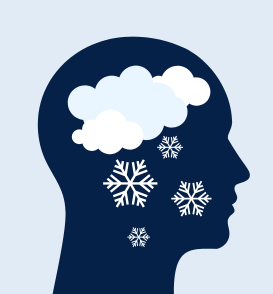
It’s common to feel a drop in mood once the holiday season ends. Long January days, limited sunlight, and colder temperatures can leave many people feeling more tired, craving comfort foods, and wanting to “hibernate” by sleeping more or spending more time alone. However, for some, the winter months bring a kind of depression that is more than the ‘winter blues’ called seasonal affective disorder (SAD).
According to the American Psychiatric Association, about 5% of adults in the U.S. experience SAD. This form of depression usually begins in the late fall or early winter and improves by summer. Because SAD is a type of depression, it is important to treat it, so it does not lead to problems such as suicidal thoughts or behavior, social withdrawal, school or work issues, or substance abuse.
“Typical depression often causes a person to eat less and sleep less,” says Michael Levy, MD, Senior Attending Psychiatrist at Montefiore Nyack Hospital. “With SAD, a person often gains weight and may sleep up to 14 hours a day during the winter.” A person may start out with milder symptoms, which become more severe as the season progresses. SAD may cause constant fatigue and irritability, as well as a heavy feeling in the arms or legs. SAD may lead to a craving for high-carbohydrate foods. Some people with SAD have bipolar disorder. They become depressed in the winter, and manic in the spring and summer, Dr. Levy notes.
While the causes of SAD are not known, factors that may contribute include reduced sunlight in fall and winter, which can disrupt a person’s internal clock and lead to depression. Reduced sunlight exposure can also lead to a drop in brain chemical serotonin levels, which affects mood. Melatonin, which plays a role in sleep patterns and mood, may also be affected by the change in season.
Diagnosing SAD
If you feel depressed for days at a time, can’t get yourself to do everyday activities, and your sleep patterns and appetite have changed, see your doctor. To diagnose SAD, the doctor will conduct a physical exam, as well as a psychological exam to check for signs of depression. An underlying medical problem, such as heart disease, may cause some cases of depression. The doctor will look for seasonal patterns, such as depression that begins and ends during specific seasons every year, and no episodes of depression during the season in which a person experiences a normal mood.
Treatment
Treatment may include light therapy and antidepressant medication. Both treatments together appear to be more effective than either one alone, Dr. Levy notes. A person using light therapy sits in a room with a special light therapy box that exposes them to bright light. “Ordinary light doesn’t do the trick,” Dr. Levy says. “Light therapy boxes for SAD are most effective when a person uses one at the beginning of the day, when it’s still dark out, for about two hours daily. You don’t have to stare at it—you just need to be in the room somewhere near it.” The light seems to cause a change in brain chemicals associated with mood. The treatment often starts working in a few days or weeks.
Antidepressants used to treat SAD include selective serotonin reuptake inhibitors (SSRIs) such as sertraline (Zoloft) and escitalopram (Lexapro). For people with SAD that is part of bipolar disorder, bupropion (Wellbutrin) is often prescribed.
Improve Your Mood This Winter
The winter can have a dampening effect on many people’s mood, even if they don’t have SAD, Dr. Levy says. “Just after the holiday season, a lot of people seem to go into a mild funk,” he says. “It can be a combination of the weather, feeling let down after the holidays are over, and the stress of job or school responsibilities.” For people who feel down during the winter but don’t have depression, Dr. Levy recommends trying to sleep with the shades up to let as much light in as possible. He also encourages people to try to take a winter vacation. “If you can go somewhere warm and well-lit in the winter, it can be helpful,” he says.
For those who can’t afford the time or money for such a vacation, try to get outside—even on cold or cloudy days. Dr. Levy advises, “Get outside early in the morning, so you can expose yourself to whatever light is available.”
To schedule an appointment with Dr. Levy, call 845-897-8371 or visit highlandmedical.co/psychiatry for more information.